We’re all drowning in data and analytics these days, with many of us seeking every tiny morsel of information we can get about everything that’s going on around us. The world of video surveillance is no different and artificial intelligence is ensuring there’s much more to come.
Our panel of security integrator experts see plenty of growth potential in the video surveillance space going forward, even as it seems like you can’t go almost anywhere these days without seeing a camera capturing your every move, and AI is at the heart of that exponential growth.
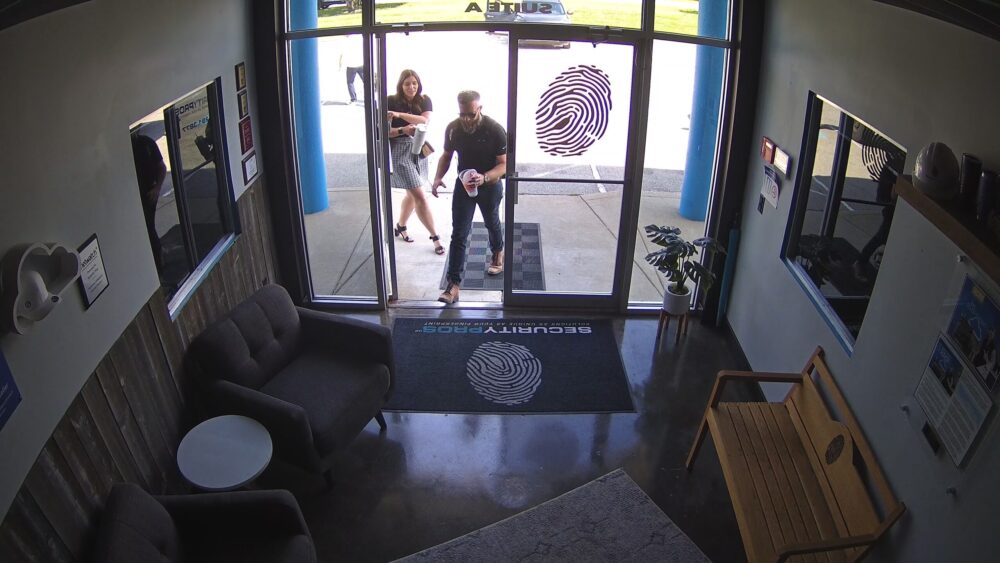
Video surveillance represents “probably 60 to 70 percent of revenue, both project revenue and and recurring revenue” for Sellersburg, Ind.-based Security Pros, says director of client success Mike Williams, noting their client base takes them around the world.
Security Pros focuses on worldwide logistics, trucking transfer, air freight, financial services, K-12 education, houses of worship, cities and municipalities among its offerings, says Williams, with footholds on five of seven continents and hopes of working in Africa and Antarctica.

Doug Walsh, vice president of technology strategy for SSI 2025 Installer of the Year Securitas Technology, sees video surveillance “evolving from standalone camera systems into connected, intelligence-led ecosystems,” he says.
“Across the industry, organizations are moving away from fragmented, reactive environments and toward integrated platforms that bring together video data, and insights into a more unified experience,” says Walsh, pointing to the company’s 2026 Global Technology Outlook Report.
“Artificial intelligence is accelerating how quickly organizations can surface relevant information, while cloud adoption, particularly camera-to-cloud architectures, is becoming the new standard,” he says.
“These technologies are transforming video from a passive recording tool into a source of real-time insights and operational value,” says Walsh. “Clients are increasingly focused on solutions that not only enhance security but also improve efficiency and resilience across their operations.”
This evolution, says Walsh, “is driving demand for simpler, more scalable platforms that connect systems, reduce complexity, and support a shift toward more proactive and predictive security models.”
Nick Schoch, the director of operations for Systems Technologies, the Wisconsin-based low-voltage integration division of Pieper Electric, calls video surveillance “a big piece of our offering,” which also includes access control, structured cabling and fire alarms along with dabbling in audiovisual integration.
Systems Technologies has “a heavy focus” on large commercial, industrial, institutional installations, including healthcare, corrections, K-12, some technical colleges and universities and some large industrial projects, including pulp and paper, heavy manufacturing, food and pharmaceuticals.
Schoch calls video surveillance “obviously a market that is strong right now. It’s rare that you would see a job that doesn’t have some form of video surveillance in it. We are fortunate to have some enterprise customers that we’ve worked with for over 20 years. Ultimately, they continue to add devices to their systems as well.
“It’s a big part of what we do,” he says. “We’re ordering cameras, we’re ordering servers, we’re ordering devices every day, and we’ve been very successful with that,” he says.
Brent Kiernan, the director of product management for Irving, Texas-based Everon, calls video surveillance “a pretty large piece” of its overall security and life safety operation, which ranges from retail to healthcare and many other verticals and includes managed services and central station monitoring along with product lines across security, fire and life safety.
Video surveillance, says Kiernan, is “a large chunk of our business, a very important part of our business with some of the trends that are emerging, in particular around monitoring. It’s a very important piece for us.”
Image courtesy of Emerald
Who’s Leading the Video Surveillance Conversation?
While customers are certainly becoming more sophisticated in what they want to solve their problems, security integrators are still largely leading the conversation when it comes to what the actual solutions will entail, according to our panel of experts.
“If we can’t get to the deeper problem, we feel like we failed,” says Williams. “If we walk into a situation where they’re saying, ‘give me 4K here, aimed at this and so on,’ we’re probably going to challenge that or we’re at the very least going to ask why.”
“If you’re not getting to a root cause problem that is making their operation less efficient, you’re not going to really make yourself valuable. If you’re not obviously well worth it, you’re going to lose clients,” he says.
Most Securitas Technology customers “come into the conversation with a clear understanding of the challenges they are trying to solve, whether that is improving visibility, managing risk, getting more value from their existing systems or eliminating the “noise,” like false alarms, in their security environment,” says Walsh, but the integrator still plays a key role.
“At the same time, the pace of innovation is creating opportunities many organizations have not fully explored,” he says. “That is where our role as a trusted advisor becomes critical. We work closely with clients to understand their priorities and help connect those needs with the right technologies, bringing simplicity to what is often a complex environment.”
“In many cases, the most productive discussions happen when we can introduce capabilities that go beyond traditional video surveillance. By showing how integrated platforms can connect systems, data and insights into a single experience, we help clients unlock greater business value and enable them to focus on what matters most in their business,” says Walsh.
“The move toward more intelligent, outcomes-driven security strategies is the ultimate goal,” he says.
Systems Technologies, says Schoch, is “always hunting, but farming is a big part of our go-to-market [strategy].”
“One of the advantages with how we go to market and the products that we offer is we have customers that start out with 40 devices on their system and, five years later, have 400 devices on their system,” he says.
Everon sees a variety of approaches, says Kiernan, ranging from large enterprise customers from whom “we’re taking the signal” on what services and offerings they need to others for whom the company is “more prescriptive about we prefer them to use.”
“Ultimately, it’s all about the customer needs and making sure we’re solving those in the best way possible,” he says.
AI in Video Surveillance
As with most industries these days, AI is taking on increased importance in video surveillance, with the myriad analytics opportunities offering customers new capabilities they hadn’t previously had and making it easier for them to find the exact information they need quickly.
“It’s pretty easy to say, ‘hey, you don’t want to sit there and watch all your video cameras all day, do you?’ And humans aren’t the right tool for that, even if you did somehow weirdly enjoy it,” says Williams with a laugh.
Image courtesy of Emerald
He sees artificial intelligence as “a computer system you never log in to” but it still provides a steady stream and flow of information.
AI “is raising expectations,” says Walsh, noting clients “no longer see video as a passive solution.”
“They expect it to deliver real-time insights, faster response and measurable impact on their operations,” he says. “There is also a growing expectation around ease of use. Security teams want to quickly find what matters without spending time reviewing large volumes of footage or administering complex search platforms.”
“Capabilities like AI-driven analytics and natural-language search are transforming how users interact with video, allowing them to surface relevant events and patterns in seconds.
To meet these expectations, our focus is on delivering solutions that combine artificial intelligence, cloud technology and integrated platforms in a way that is practical and scalable,” says Walsh.
“By bringing video, systems and insights together into a unified experience, we are helping clients move from reactive operations to more predictive and proactive security models while enabling faster decisions and improved outcomes,” he says.
Schoch touts the ability of AI to help with installation of video surveillance cameras, particularly if the installer isn’t fully trained on all the ins and outs of a particular camera or system.
Some companies incorporate QR codes with their cameras to assist technicians in setting up the devices, which are pre-configured, meaning when the technician hangs them on the wall, “the programming is pretty much done,” he says.
Incorporating AI in video surveillance is about “trying to match up the needs for the customer or what makes the most sense for them in terms of the sophistication of their security or life safety footprint and then applying whatever. AI features and functions that make the most sense for them,” says Kiernan.
In other cases, he says, Everon is “matching up AI or analytics that help the customer with, say, OSHA violations or, even in some cases, some things emerging around life safety where detection of smoke or fire is becoming important from a video perspective.”
Staying Educated
When Williams and the rest of the Security Pros team discuss “the next big thing” with customers, meaning capabilities that will help them add an increased level of security, “it really gets them listening.”
Staying in touch with customers and keeping them informed about new capabilities and offerings could lead to a surprising development in the integrator-customer relationship, says Williams.
“They will start to come up with examples of how it might help them that you didn’t think of,” he says.
The ability to have those conversations with customers comes from staying educated on the latest solutions and services and understanding the ones that are coming next, says Williams. He relies on industry trade publications, conferences and trade shows and contacts his manufacturer partners regularly to take their pulse on the latest offerings on the market.
Systems Technologies goes to major industry events, including ISC West, as well as conferences hosted by its manufacturer partners and local trade shows as well as events at local colleges and universities.
“I don’t think there is a magic way to do that,” says Schoch. “It’s just a whole lot of time and a whole lot of effort.”
The company also invests significantly in training its employees, including at the Milwaukee-based Axis Experience Center.
“It’s a great way to put your people in front of the latest products and ultimately industry experts and really do a deep dive into functionality and just make your people better,” says Schoch. “If you take really good people that are installers and invest in them through training, in every case, you’ll have a happy customer because they’re hiring somebody who’s not only excited about what they do, but they’re very knowledgeable about it.”
Everon is involved in several industry groups, says Kiernan.
“We’re always scanning the market,” he says. “One of the things we do is just try and stay on top of the trends and see what’s going on from various places to do scanning and research. In particular, our partners are always very good to us in terms of giving us early looks at things.”
Everon has an innovation center at its headquarters, says Kiernan, and that allows them to do “a ton of evaluation work early on, providing feedback to our partners and they’re finding solutions, ideally, before they hit the market.”
Testing New Video Surveillance Capabilities
Regardless of how tight our panel of integrators is with its manufacturer partners, that doesn’t mean they’ll deploy a new product or capability for their customers without first putting it through its paces.
“I’m a trusting guy but, until we’ve seen it working, it’s hard for us to go to our technician crew or the subcontractor network we use and say, ‘hey, we’re putting our stamp of approval on this,’” says Williams, noting they test new products and services for at least a couple of months.
Having an Axis Experience Center near its headquarters location allows Systems Technologies to “beat up new products,” says Schoch, who touts his relationships with manufacturer partners as a key component in testing new products and services.
“We have trusted relationships, so we are honest with each other,” he says. “Sometimes the solution does work and sometimes it doesn’t work the way we want it to work but our partners are open and honest with us.”
If Everon’s manufacturer partners are adding new capabilities to existing products, those tests are relatively quick, says Kiernan, but the beta phase can be much longer in cases of a more significant upgrade or new product.
That’s true of AI context, where users look at the different types of visual searches and/or proactive visual alerts and utilizing natural language as an easier way to start to begin to apply analytics.
“As you could probably imagine, that opens a humongous door as to what the imagination could bring to the table on what you wanted to be alerted on and using those people, vehicle or object analytics at your disposal to do that,” says Kiernan.
“This presented some interesting, potentially ethical things to make sure that we’re not allowing folks to type in or search for things that might be sensitive,” he says.
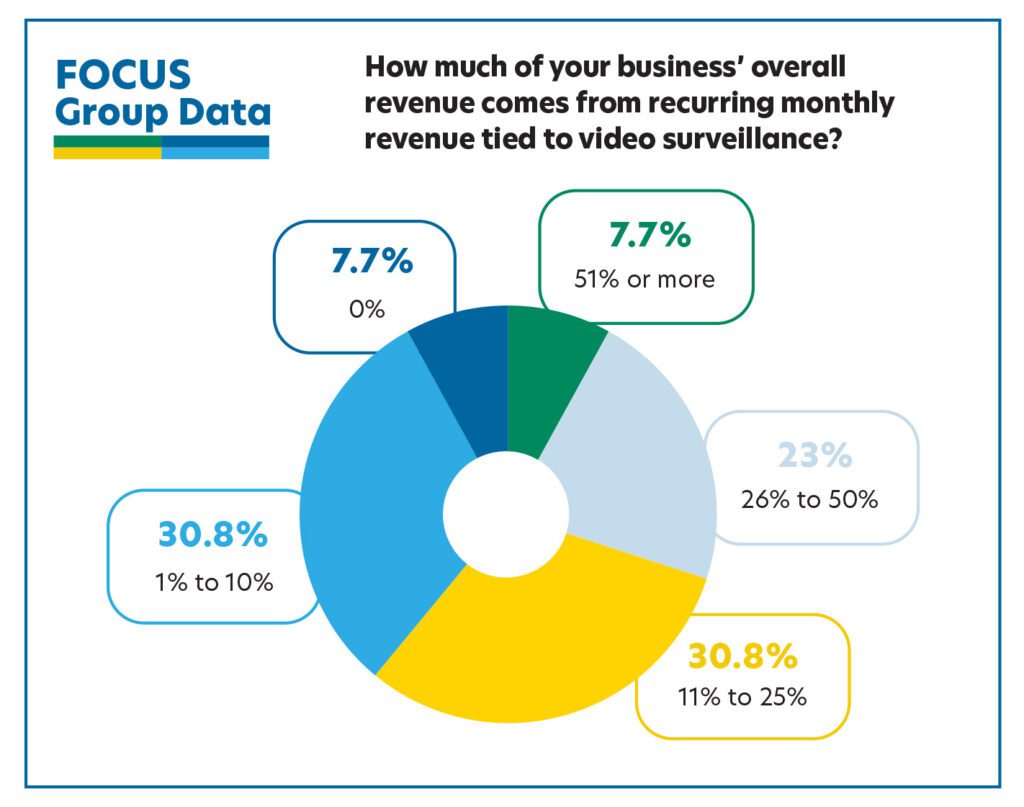
Image courtesy of Emerald
RMR in Video Surveillance
Recurring monthly revenue has been part of Security Pros’ business philosophy “since day one,” says Williams. About 40 percent of the company’s revenue comes from RMR, he says, although their goal is to push that to at least 50 percent.
“The philosophy has always been, ‘we own this system. We don’t by title own it but we stand behind it and we’ve got you.’ Your security is our problem, not yours,” he says. “For us to be able to deliver on that pledge, we need to make that an ongoing promise and ongoing means subscription [and] we’re going to make sure you’re getting the most out of it.”
“We want to know as deeply as we can about how they operate and what matters to them,” says Williams. “But #2, it’s got to keep working, so we’re going to log in from time to time and make sure your pictures at night are still working. Does it work in the rain? Does it work in the winter? What is the uptime and reliability? And are the recordings still good? And how many days are you getting? And can we stretch that out?”
A “large portion” of Systems Technologies’ customers purchases software assurance to go with their security systems, says Schoch, and more of them are asking about subscription-related models.
“Our go-to-market in almost every case will be a hybrid model, where customers will have a piece of some hardware on site and then some devices that are recording to the cloud and it’s a subscription,” he says.
“With many of our enterprise customers, there’s a fit for a piece of it, but, as I sit here today, I don’t see them fully transitioning to a complete subscription-based model,” says Schoch. “There will be some of each. And with our offerings, we’re set up to do it that way. And that is one of our core competencies or one of our advantages we have in the market.”
Everon puts RMR “at the forefront,” says Kiernan, with increasing numbers of customers wanting a subscription-based model.
“It’s really about partnering with our video partners to get the right pricing models and business models in place for that,” he says. “We’re starting to see more and more manufacturers come out with easier ways for us to bill and do subscription-based video for our customers.”
RMR “gives us the best flexible way to take care of the customer needs,” says Kiernan.
Everon does its own central station monitoring, which allows them to attach recurring revenue to the solutions it’s selling, he says.
“It’s kind of ingrained and embedded in kind of our business model and what we do,” says Kiernan. “It’s the trend toward making sure that it’s open and flexible.”
Saturation and Future of Video Surveillance
Image courtesy of Emerald
Williams says video surveillance is “nowhere near” its saturation point “and I think most of the industry would agree with that.”
“[Users] always wish they had another view and after you have a large installed base, adding one more view becomes more and more economical and kind of a no-brainer,” he says. “I’m very confident what’s going to happen in the next five years is all these cameras that we have deployed are going to be thought of as just detectors, eyeballs, and what we do with what they see is going to be the innovation.”
Schoch agrees that video surveillance demand “is still very strong,” noting Systems Technologies continues to see “a lot of opportunities to upgrade existing endpoints. They’re not just cameras anymore. They do so much more than that.”
“Our customer base continues to add endpoints to their systems. Part of that is our world is not full of less security or there’s enough shady business going on out there that people want to protect their people at their buildings. They want to protect their assets,” says Schoch.
Kiernan sees no end in sight to the uses and types of deployments for video surveillance cameras, ranging from simple updates to analog systems to new capabilities.
“Everything is kind of going towards AI and agents and consolidation of systems,” he says. “I think we’re going to start to see, or already starting to see, this in many platforms, that everything’s consolidated. The idea of security is kind of all in one platform so I don’t need to have separate access control and intrusion and video. It’s all just going to be ubiquitous.”
In the next several years, video surveillance will likely be part of the AI agent you’re running on your computer, says Kiernan.
“I see video kind of fitting into that as a heavy sensor and an ability to provide all sorts of important data, as we kind of touched on previously,” he says. And there should be some great opportunities to continue to evolve that and utilize it as a great source of information and being able to pull anything up at your disposal at any point in time.”
Final Thoughts
Williams encourages the security industry not to be afraid “to move super-fast” when it comes to deploying video surveillance in new and interesting ways for their customers.
“I almost feel like we are where the IT industry was, where they moved fast and broke things and very often they would be putting in version 3 when version 2 wasn’t 100% yet,” he says. “Clients are going to want to move to new capabilities that get them operating better and not worry about having every bell and whistle that this or that competitor has.
“If you can move them to a capability they didn’t have yesterday, do it. Move fast. Don’t be shy,” says Williams.
License plate recognition is one area that’s gaining more traction in the video surveillance game, says Schoch.
“It’s definitely become more affordable to do,” he says, noting that using license plates as credentials to enter a gate or garage or other restricted area has finally taken hold with customers in the past 12 to 18 months after integrators have offered that capability for many years.
“That feature’s been out there a long time,” says Schoch. “We’ve been able to do it, but we just haven’t had that customer take the dive into it. It’s become more affordable, too. That’s not super unique but that’s one solution that we’ve had for a long time that we’re finally seeing some deployments.”
Everon is seeing opportunities emerge in business and operational value, says Kiernan.
“We started to see things that traditionally we wouldn’t have probably thought about because we were having such a security focus,” he says. “Now, people want to better understand how people are moving in their space and occupancy and those sorts of things.”
“Those are not necessarily surprising use cases but just the fact that it’s moving from historically video surveillance as security focus to offering better business value,” says Kiernan.
On the life safety side, Everon is starting to see an opportunity where video can couple or help in the fire alarm space for better, earlier detection than what traditional fire alarm sensors can do as well, he says.
“There are definitely some interesting things emerging in that space,” says Kiernan.